Engineered Quiet: The Architects Charging Fortunes to Silence the Modern World
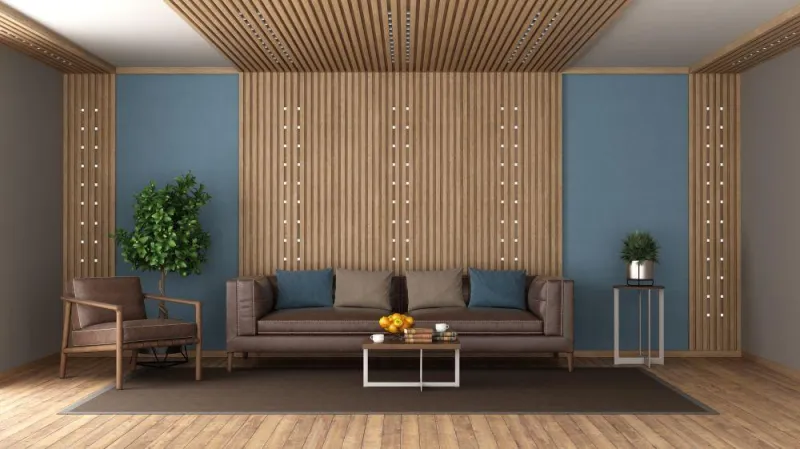
Photo: minimalist luxury interior soundproofing acoustic wall design modern home, via fabdiz.com
There is a particular irony in the fact that the loudest cities in the United States — New York, Los Angeles, Chicago, Miami — are also home to the residences where silence is most obsessively pursued. For a growing cohort of ultra-wealthy Americans, the ambient roar of modern life has become not merely an inconvenience but an affront, and they are spending extraordinary sums to shut it out entirely.
Acoustic architecture — the art and science of engineering sound environments within built spaces — has existed in professional circles for decades, largely in the service of recording studios and concert halls. What is new, and what speaks directly to a broader cultural shift among America's affluent, is the migration of this discipline into private residences, executive offices, and bespoke wellness retreats. Specialists in this field are now commanding fees that begin at six figures for a single room consultation and can escalate well into the millions for a full residential commission.
The Value of Nothing
To understand why silence commands such a premium, one must first appreciate what it has come to represent. In an era of perpetual connectivity — where notifications, traffic, and the ambient hum of urban infrastructure constitute an almost inescapable sonic wallpaper — the ability to experience true quiet has become vanishingly rare. Scarcity, as any economist or luxury brand strategist will confirm, is the engine of value.
Acoustic engineers who work at the residential level describe their clients in consistent terms: high-achieving professionals, often in finance, technology, or entertainment, who have exhausted conventional approaches to focus and recovery. Noise-canceling headphones have been tried and found insufficient. Retreats to remote properties offer temporary relief but not a permanent solution. What these clients seek is an environment that does not merely reduce unwanted sound but actively cultivates a calibrated acoustic atmosphere tailored to their neurological preferences.
The distinction matters. Reducing sound and designing sound are fundamentally different disciplines. The former is a problem of insulation; the latter is closer to composition.
What the Work Actually Involves
A full acoustic commission for a private residence in the contemporary luxury market typically unfolds in several phases. The initial assessment involves measuring the existing acoustic signature of a space — its resonant frequencies, its reflective surfaces, the specific character of the noise it admits from outside. This diagnostic phase can itself take several weeks and involves proprietary measurement technology that maps sound behavior across a three-dimensional model of the property.
From there, the design process begins in earnest. Walls may be rebuilt with layered assemblies of mass-loaded vinyl, resilient channels, and specialized drywall compounds engineered to absorb and decouple vibration at specific frequencies. Floors are floated on isolation pads. Windows — often already substantial in high-end properties — are replaced with laminated acoustic glazing units that can achieve sound transmission ratings far beyond what standard double-pane installations provide.
But the more rarefied end of this market moves beyond mere isolation into what practitioners call "acoustic tuning." Here, the goal is not simply to eliminate unwanted sound but to introduce a precisely calibrated sonic environment. Some clients commission personalized white noise or pink noise systems, embedded invisibly within architectural elements, that generate a continuous, psychoacoustically designed background tone. Others request what is known as a "dead room" — a space so acoustically inert that the human ear, deprived of all reflected sound, perceives a profound and somewhat disorienting stillness.
For meditation suites and private wellness spaces, acoustic designers sometimes collaborate with neuroscientists and sound therapists to develop environments that are engineered not just for quiet but for specific cognitive states. The frequency profile of a room intended for deep meditation differs meaningfully from one designed to optimize executive focus or creative ideation.
The Professionals Behind the Silence
The specialists commanding the highest fees in this field occupy a fascinating professional intersection. They are typically trained as architects or acoustical engineers, but their most valuable asset is something closer to intuition — an ability to translate a client's experiential aspirations into the precise language of physics and materials science.
Several firms operating in major American metropolitan markets have quietly built practices almost entirely on residential acoustic commissions. Their client lists, predictably, are not disclosed. The work is rarely photographed, because the most remarkable acoustic spaces are also the most visually understated — a room that achieves genuine sonic perfection often looks, to the uninformed eye, simply like a very well-appointed room.
This invisibility is, for many clients, precisely the point. The silence premium is not a statement made to guests; it is a private investment in one's own quality of experience. It is, in this sense, among the purest expressions of contemporary luxury: value that is entirely personal, entirely non-performative, and entirely irreplaceable by anything money cannot, in fact, buy.
A Broader Cultural Signal
The appetite for acoustic architecture reflects something larger about the direction of luxury in America. As the most affluent consumers have progressively turned away from conspicuous consumption toward what might be described as experiential sovereignty — the ability to curate the precise conditions of one's own existence — the built environment has become an increasingly important canvas.
Noise, in this framework, is a form of involuntary exposure. To eliminate it is to reclaim a measure of control over one's sensory life that urban density and digital culture have steadily eroded. The willingness to invest millions in that reclamation is, at its core, a statement about what focus, clarity, and mental restoration are actually worth.
For America's most discerning inhabitants, the answer, increasingly, is everything.