When the Estate Doesn't Fit: How a New Wave of Heirs Is Quietly Dismantling the Luxury Inheritance
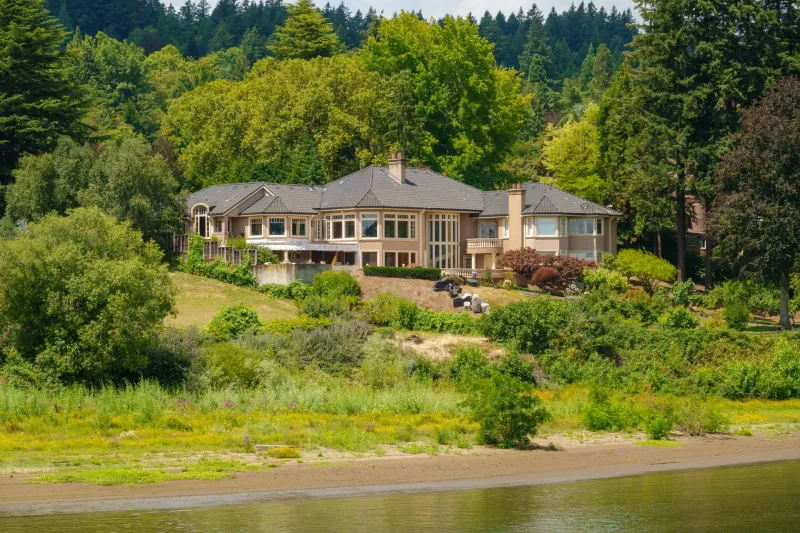
The summer home in Newport still stands. The membership at the club their grandfather helped found remains active. The family name is engraved on a university building that the current heir has never once visited. And yet, for a growing number of inheritors across America, none of it feels like theirs.
This is not a story about ingratitude. It is a story about a fundamental philosophical rupture between two generations who understand wealth—its purpose, its expression, and its obligations—in ways that are becoming increasingly incompatible.
The Accumulation Era and Its Discontents
For much of the twentieth century, affluence was legible. It announced itself through property, through institutional affiliation, through the careful preservation of objects and names. The families who built great American fortunes between the 1940s and the 1980s largely understood luxury as something you accumulated and then protected. The estate was a statement. The art collection was a record. The dynastic continuity was the point.
That model produced extraordinary things. It funded institutions, preserved craftsmanship, and created the aesthetic infrastructure that still defines much of what we associate with American high culture. But it also created a particular kind of pressure—an expectation that wealth would be received, maintained, and passed forward in essentially the same form it arrived.
For many Gen X and millennial heirs, that expectation has become a source of profound dissonance.
"My father's entire identity was organized around what he owned," says one 41-year-old heir to a Midwestern manufacturing fortune, who asked not to be identified by name. "The house, the cars, the foundation that bore our family name. And I remember standing at his funeral thinking: none of this is me. None of this is what I want my life to mean."
A Different Architecture of Value
What distinguishes this generational split is not simply that younger heirs prefer experiences over objects—that observation has become almost a cliché in wealth management circles. The distinction runs deeper. It is a disagreement about what wealth is fundamentally for.
Where the prior generation often understood affluence as an end in itself—the accumulation of assets and influence as a form of security and social identity—many millennial and Gen X heirs have arrived at a more existential framing. They are asking what a life of affluence should produce: in the world, in their own character, in the communities they touch.
Dr. Serena Okafor, a psychologist based in New York who works exclusively with high-net-worth families navigating intergenerational transitions, describes the shift as a movement from what she calls "positional luxury" to "purposive affluence."
"The older model said: your wealth positions you in a social hierarchy, and the markers of that position are the luxury goods, the properties, the institutional affiliations," she explains. "The newer model says: your wealth gives you the freedom to pursue something meaningful, and the question is whether you're using that freedom with intention. Status becomes almost beside the point."
This reframing has practical consequences that families are only beginning to reckon with. When an heir decides that the Newport estate represents an obligation rather than an inheritance—when a family collection feels more like a burden than a birthright—the conversations that follow can be quietly devastating.
Families in Negotiation
The tensions play out differently in each family, but certain patterns recur with striking consistency.
In one case documented by a family wealth advisory firm in Chicago, a 38-year-old heir to a retail fortune spent three years in quiet conflict with her parents over the disposition of a significant art collection her father had assembled over four decades. She did not want to sell it—she wanted to place it permanently with a museum in a city where it could be accessed by a broader public. Her father understood this as a betrayal. She understood it as the most meaningful thing she could do with an asset that had always felt, to her, like it belonged to the culture rather than to the family.
The resolution took years and required the intervention of a specialized legacy advisor—a relatively new category of professional that has emerged precisely to navigate these ruptures. These advisors occupy a space between estate planning, family therapy, and philosophical counsel, helping families develop what one practitioner calls "a shared grammar of value" that can accommodate genuinely different worldviews.
"The mistake families make is treating this as a conflict to be resolved," says Marcus Whitfield, a legacy strategist who works with multigenerational families across the Southeast. "It's not a conflict. It's a conversation that the family hasn't been equipped to have. My job is to give them the language."
What the Heirs Are Building Instead
What emerges from conversations with younger heirs is not a rejection of affluence itself, but a reimagining of its grammar. Many are channeling wealth into endeavors that would have been unrecognizable to their parents as legitimate expressions of status: funding independent journalism, supporting regenerative agriculture, endowing residencies for artists working outside the commercial mainstream, or simply living with a deliberate modesty that reads, to their parents' generation, as inexplicable.
Some are selling the estates. Some are converting them. One heir to a Virginia tobacco fortune has transformed a portion of the family's land into a working ecological preserve, open to researchers and school groups. His grandmother, still living at 94, has not spoken to him about it directly. His father calls it "the experiment," with a tone that suggests he is still waiting for it to end.
It will not end. That is perhaps the most important thing to understand about this generational shift. It is not a phase. It is not youthful idealism waiting to mature into conservatism. It is a genuinely different philosophy of living, shaped by a different set of cultural pressures, anxieties, and aspirations—and it is becoming the dominant mode of affluence among those who will steward the greatest concentrations of American wealth for the next half century.
The Advisors Building Bridges
The professionals emerging to serve these families are themselves a new kind of luxury practitioner. They are not financial planners in the traditional sense, though they work alongside them. They are not therapists, though emotional intelligence is central to their practice. They are, in a sense, translators—people who can hold the values of two generations simultaneously and help families find the points of genuine overlap.
"The good news," says Dr. Okafor, "is that the overlap is usually larger than the family imagines. What the parents actually want, at the deepest level, is for the family to mean something. What the heirs want is for their lives to mean something. Those are not incompatible ambitions. They just require a different vocabulary to connect."
The Newport house may stay in the family. Or it may not. But the conversation about what it means—and what the family chooses to build in its place—is one that is happening, quietly and consequentially, in drawing rooms and conference calls and family retreats across the country. The luxury inheritance is not disappearing. It is being renegotiated, one generation at a time.