Deliberately Disconnected: How Analog Living Became the Most Coveted Status Symbol of the Digital Era
There is a certain irony embedded in the current state of American luxury. At the precise historical moment when digital technology has reached its most sophisticated and pervasive expression — when nearly every surface, transaction, and social interaction has been rendered legible to some algorithm — the most affluent consumers in the country are paying considerable sums to escape it entirely.
This is not a rejection of modernity born of technophobia or nostalgia. It is something far more deliberate, and in its own way, far more sophisticated. Among a growing cohort of wealthy Americans, the cultivation of an analog life — rich with handcrafted objects, unhurried correspondence, and experiences that resist documentation — has become the defining luxury gesture of the era.
The Texture of the Unreproducible
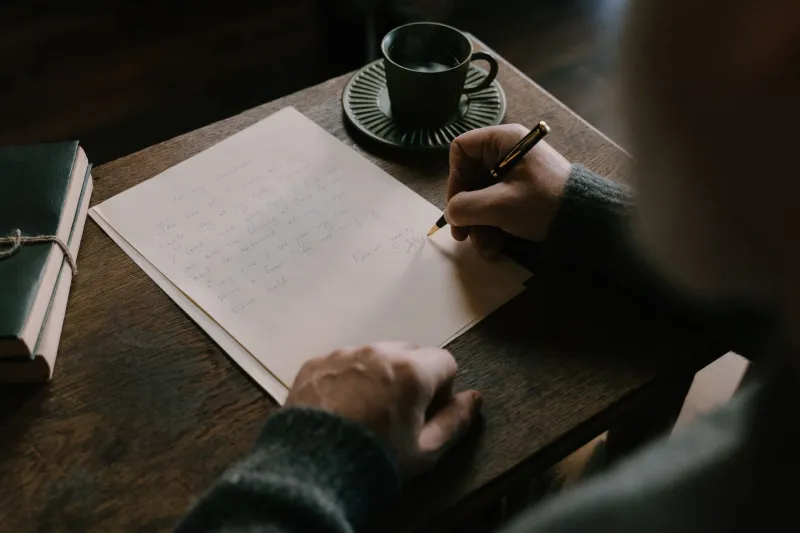
Begin with something as seemingly modest as a letter. In an environment where electronic communication has become so instantaneous as to feel disposable, a small but flourishing market has emerged around handwritten correspondence services. These are not mere stationery boutiques. The most exclusive operators — several of which maintain discreet client lists in New York, Los Angeles, and Chicago — offer comprehensive correspondence management: archival-quality papers sourced from European mills, custom-blended inks, calligraphers trained in historical scripts, and, in some cases, a dedicated personal correspondent who composes letters on behalf of clients in a voice refined over months of collaboration.
The appeal is not purely aesthetic. A handwritten letter, by its very nature, cannot be forwarded, screenshotted, or algorithmically analyzed. It exists in a single physical instance, travels at the pace of the postal service, and arrives as an object to be held. For individuals who conduct their professional and personal lives almost entirely within surveilled digital environments, this quality of irreproducibility carries genuine value — not merely sentimental, but strategic.
Estates Designed for Absence
The domestic expression of analog luxury has grown considerably more ambitious in recent years. Among the most significant architectural commissions being undertaken by wealthy American clients are what designers in the field have taken to calling "technology-recessive" or "digitally quiet" properties — estates designed from the ground up to minimize the presence of screens, smart systems, and wireless infrastructure.
This does not mean these homes are primitive. They are, in fact, extraordinarily refined — outfitted with radiant heating systems, acoustically engineered rooms, wine cellars maintained by hand, and kitchens designed for serious, unhurried cooking. What they deliberately lack is the ambient hum of connectivity: the smart speakers, the automated lighting grids, the integrated entertainment systems that have become standard features of high-end residential construction.
"My clients are not rejecting technology," explains one architect who has completed several such commissions in the American Northeast and the Mountain West. "They are asserting control over it. There is a profound difference. The home becomes a space where they decide the terms of engagement, rather than having those terms set for them."
Some of these properties include designated rooms — sometimes called "correspondence rooms" or simply "quiet rooms" — where no electronic devices are permitted. The design language in these spaces tends toward the deeply material: hand-plastered walls, floors of reclaimed stone, furniture built by named craftspeople. Every element is chosen to reward sustained attention.
The Analog Hobby as Cultural Signal
Beyond the home, the analog turn is visible in the leisure pursuits that have gained significant traction among affluent Americans over the past several years. Letterpress printing, bookbinding, watchmaking, botanical illustration, classical horsemanship, hand-thrown ceramics — these are disciplines that require extended apprenticeship, resist acceleration, and produce outcomes that bear the unmistakable mark of human imperfection.
This last quality is, counterintuitively, central to their appeal. In a cultural environment where digital tools can produce flawless output with minimal effort, the visible trace of a human hand — the slight variation in a thrown bowl, the impression of type on heavy paper — reads as evidence of genuine investment. It cannot be simulated convincingly, and it cannot be scaled. These are properties that luxury, at its most essential, has always prized.
The market for instruction in such disciplines has responded accordingly. Master craftspeople who might once have struggled to find apprentices now find themselves fielding inquiries from accomplished professionals willing to travel considerable distances — and pay commensurately — for sustained, serious tutelage.
The Retreat Economy's Analog Frontier
The wellness retreat sector, long a reliable barometer of affluent cultural values, has registered this shift with particular clarity. The fastest-growing category within the high-end retreat market is no longer defined by cutting-edge biometric monitoring or advanced therapeutic modalities. It is defined, instead, by the deliberate absence of such technologies.
The most sought-after properties in this category — scattered across remote stretches of Vermont, Montana, New Mexico, and the Pacific Northwest — operate strict device policies from the moment of arrival. Guests surrender phones and laptops at check-in. Schedules are communicated on printed cards slipped beneath doors. Meals are taken communally, without screens, at unhurried length. The programming centers on activities that require presence: guided nature immersion, hand-papermaking workshops, extended silent walks, evening readings by firelight.
Waiting lists at the most established of these retreats extend well beyond a year. The clientele, by all accounts, includes some of the most prominent figures in American technology and finance — individuals whose professional lives are defined by digital saturation, and who have come to regard its periodic, complete suspension as a form of restoration unavailable anywhere else.
Scarcity, Redefined
What unites these various expressions of analog luxury is a coherent underlying logic: in an age of infinite digital replication, genuine scarcity has migrated to the physical, the slow, and the irreproducible. A handwritten letter exists once. A hand-thrown vessel bears the specific trace of a specific afternoon. A week without a screen cannot be photographed and shared without immediately negating its own premise.
For the affluent American consumer who has exhausted the conventional registers of luxury signaling, this is a compelling proposition. Unplugging, it turns out, is not a retreat from sophistication. It is, increasingly, its most refined expression.