Possession Is Passé: How America's Wealthiest Are Trading Ownership for Orchestrated Access
For generations, wealth announced itself through accumulation. The estate, the fleet of automobiles, the wine cellar stocked beyond any single lifetime's consumption — these were the grammar of affluence, legible to anyone who cared to look. But something significant is shifting among the upper echelons of American wealth, and it has relatively little to do with financial prudence. It has everything to do with a fundamental reimagining of what luxury is actually for.
Increasingly, ultra-high-net-worth individuals — those with investable assets exceeding $30 million — are divesting themselves of the burdens that accompany ownership and replacing them with something more fluid, more responsive, and arguably more sophisticated: orchestrated access.
The Weight of Things
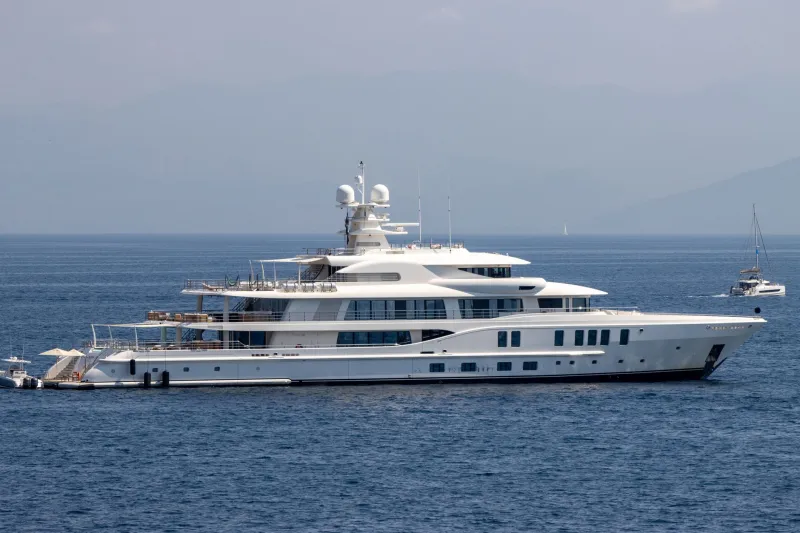
There is an irony embedded in the accumulation of extreme wealth. The more one acquires, the more one must manage. A superyacht requires a year-round crew, a port of registry, insurance premiums that rival the GDP of small municipalities, and a maintenance schedule that can consume months of logistical attention. A private aircraft demands pilots on retainer, hangar fees, and an FAA compliance infrastructure that few owners fully appreciate until they are already committed to it.
What was once a symbol of freedom becomes, over time, an administrative obligation. Wealth managers and family office directors across the country have begun noting a consistent pattern among their most sophisticated clients: the desire to shed the apparatus of ownership without sacrificing the quality of experience it was meant to deliver.
"The clients who are most intentional about their lives have stopped asking what they want to own," notes one senior advisor at a multi-family office in New York who requested anonymity to speak candidly. "They ask what they want to experience, and then they find the most elegant way to access it."
Fractional Models and the Architecture of Access
The mechanics of this transition have matured considerably over the past decade. Fractional ownership — long associated with timeshare arrangements that carried an unfortunate stigma — has been entirely reimagined at the top of the market.
Companies such as Wheels Up and NetJets have refined private aviation access into a subscription architecture that grants members the operational experience of aircraft ownership without the permanence. In the marine sector, platforms like YachtLife and Burgess Yachts offer access to vessels that would individually require eight-figure investments, available instead through curated charter arrangements that can be tailored to itinerary, season, and company size.
In the art world, the model is perhaps most intellectually interesting. A growing number of collectors are engaging with rotating loan programs through institutions and private dealers, maintaining a living collection that evolves seasonally rather than calcifying around the tastes of a single acquisition period. Some are working directly with advisors to structure fractional ownership of blue-chip works — sharing legal title to a Basquiat or a Richter with two or three other collectors of comparable discernment, each enjoying extended periods of physical custody.
The financial logic is not insignificant. Capital that might otherwise be tied to a depreciating asset or a highly illiquid one can instead remain deployed in productive investments, while the experiential benefits remain intact.
Psychology at the Core
Yet the financial rationale alone does not fully explain the appeal. There is a psychological dimension to this shift that is perhaps more revealing about the current state of American luxury culture.
In an era defined by material abundance — where the merely affluent can approximate the aesthetic of wealth through accessible luxury brands, rental platforms, and aspirational interior design — the ultra-wealthy find that possession itself has lost much of its differentiating power. When a well-curated Airbnb can approximate the visual grammar of a private villa, owning the villa no longer signals what it once did.
What cannot be replicated, however, is seamless access to the genuinely rare. The ability to place a call on a Tuesday afternoon and have a 180-foot sailing yacht positioned in the Abacos by Friday, fully crewed and provisioned to one's exact specifications — that is not a product available at any price point to those outside a very particular network. The luxury, in this framing, is not the boat. It is the infrastructure of responsiveness surrounding it.
The Membership as Identity
This has given rise to a new category of ultra-exclusive membership structures that function less like clubs and more like personal operating systems for the high-net-worth life. Organizations such as Inspirato, the Membership Collective Group's more private tiers, and several invitation-only networks that decline to publicize their existence offer members not a catalog of assets, but a promise: that whatever is needed, wherever it is needed, will be arranged.
Membership in these structures has become its own form of status signaling — one that is, by design, invisible to anyone outside the circle. The absence of a logo or a publicly recognizable brand is precisely the point. What is communicated to those who understand the language is not the possession of a thing, but the possession of access itself.
A New Vocabulary of Luxury
What this trend ultimately reveals is that American luxury culture, at its most refined level, is undergoing a genuine philosophical evolution. The vocabulary is shifting from nouns — the house, the car, the collection — to verbs: to experience, to convene, to engage.
For institutions built on the traditional model of selling objects and the prestige attached to them, this presents a meaningful challenge. The most discerning clients are no longer asking to be sold something. They are asking to be served something — a distinction that demands an entirely different kind of relationship, and an entirely different kind of expertise.