Beyond Purchase: The Emerging Economy of Experiences That Wealth Alone Cannot Procure
The private jet can reach almost any destination on earth within hours. The concierge can secure a reservation at any restaurant that accepts reservations. The estate manager can source nearly any object, arrange nearly any encounter, and smooth nearly any logistical complication that wealth might generate. And yet, for a growing segment of America's most affluent, the experience that matters most is precisely the one that none of those resources can deliver.
This is the emerging economy of genuine scarcity—and it is quietly reshaping what the wealthiest Americans understand luxury to mean.
The Exhaustion of Purchasable Exclusivity
For decades, the luxury industry operated on a relatively simple premise: scarcity could be manufactured, and manufactured scarcity could command a premium. Limited editions, invitation-only memberships, private sales, velvet ropes with carefully curated guest lists—these mechanisms created the sensation of exclusivity without requiring anything from the consumer beyond the capacity to pay.
The model worked, and it worked extraordinarily well. But something has shifted among the most affluent tier of American consumers. Having acquired access to virtually everything that money can manufacture, a significant number have arrived at a kind of saturation point—a moment of recognizing that purchasable exclusivity, however well-executed, produces a fundamentally different quality of experience than the kind that cannot be bought at all.
"There's a ceiling to what money can do," says one wealth advisor who works with clients in the top one-tenth of one percent. "And a lot of my clients have hit it. They've had the private island, the commissioned piece, the chef at the house. And they've started asking: what's the thing I can't just arrange? Because that's the thing that actually means something."
The Apprenticeship as Luxury
Among the most coveted experiences in this emerging economy are those that involve genuine transmission of human knowledge and skill—encounters with master practitioners that cannot be brokered through conventional channels because the practitioners themselves have no interest in being brokered.
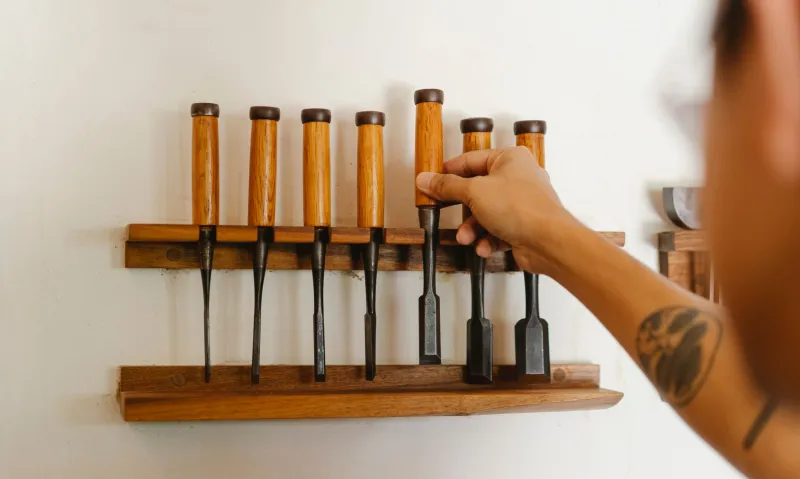
In the American South, there is a furniture maker of extraordinary reputation who has, over forty years, refused every gallery representation, every commission from institutional collectors, and every approach from luxury lifestyle publications. He works alone, accepts perhaps four or five commissions per year from people he has come to know personally, and occasionally—very occasionally—allows someone to spend a week working alongside him in his shop. Not as a paying student. As a genuine presence, expected to contribute meaningfully to the work.
Access to that week is not available for purchase. It is available only through the slow accumulation of genuine relationship, demonstrated seriousness, and what the maker himself describes, with characteristic directness, as "evidence that you're not a tourist."
Several of the people who have spent that week are among the wealthiest individuals in the country. None of them arrived through a concierge. All of them describe the experience as among the most significant of their adult lives.
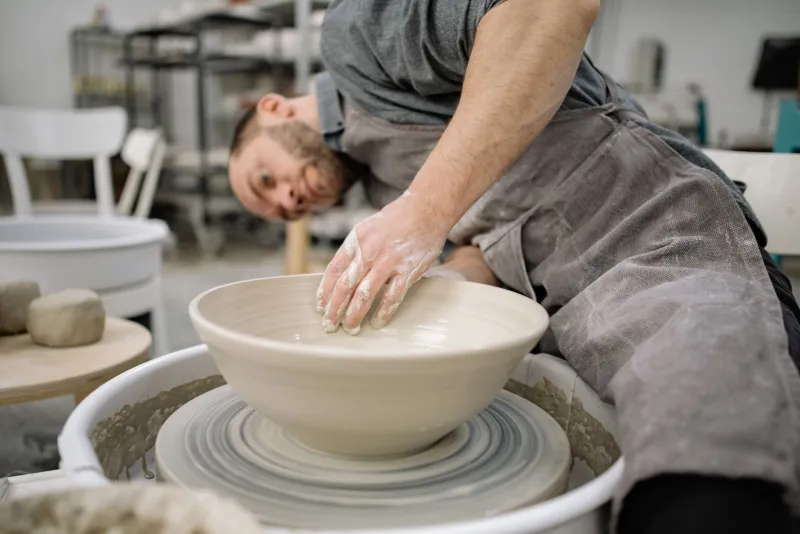
This pattern—the master practitioner who operates entirely outside commercial luxury channels, accessible only through demonstrated merit or genuine human connection—recurs across disciplines. A renowned ceramicist in New Mexico. A letterpress printer in Vermont whose waiting list is not a waiting list so much as an ongoing conversation about whether a given project merits her time. A luthier in Nashville who has made instruments for musicians whose names appear on every significant stage in the world, and who has turned down commissions from collectors willing to pay multiples of his asking price because he found the conversation unconvincing.
Intellectual Spaces and the Admission of Genuine Curiosity
Beyond the world of craft, another category of genuinely scarce experience has emerged around intellectual access—the opportunity to enter spaces where serious thinking is happening and to participate as something other than a donor or a spectator.
Certain research institutions, private intellectual salons, and informal scholarly networks have developed reputations among a small circle of affluent Americans as places where the quality of engagement matters more than the size of the check. Entry is not transactional. It is earned through the quality of one's questions, the depth of one's preparation, and the willingness to be genuinely changed by what one encounters.
"I've sat in rooms with people who have given enormous amounts of money to universities," says one participant in a private philosophy seminar that convenes four times a year in different American cities. "And some of them are genuinely curious people who have found a space where that curiosity is taken seriously. And some of them are performing curiosity because they've run out of other things to perform. You can tell the difference in about ten minutes."
The seminar in question does not advertise. It does not have a website. New participants are introduced by existing members who are willing to vouch for them—not financially, but intellectually and personally. The cost of attendance is modest by the standards of luxury. The cost of genuine participation is considerably higher.
The Cultural Moment That Wasn't Announced
A third category of genuinely scarce experience involves what might be called the unpublicized cultural moment—the performance, the gathering, the creative event that exists outside the infrastructure of promotion and documentation precisely because its participants have chosen to keep it that way.
These range in scale from intimate: a composer who occasionally performs new work for an audience of eight or ten people in a private home, by invitation only, with no recording permitted. To more substantial: a series of conversations between significant thinkers that convenes annually in a location disclosed only to participants, produces no published record, and has been operating for over a decade without appearing in any publication.
The common thread is not secrecy for its own sake, but a deliberate choice to preserve the quality of the experience by limiting the conditions under which it occurs. When documentation is impossible, presence becomes the only form of participation. When scale is constrained, the quality of attention in the room changes entirely.
"The most extraordinary things I've experienced in the last decade have been things I can't describe to you in any way that would do them justice," says one participant in several of these networks. "Not because they're secret, but because they only exist in the room. The moment you try to export them, they become something else."
What This Economy Demands
What distinguishes this emerging economy from conventional luxury is what it requires of its participants. Purchasable exclusivity asks only for money. Genuine scarcity asks for something considerably more demanding: time, attention, preparation, humility, and the willingness to be judged on terms other than financial.
For the wealthiest Americans who have chosen to pursue it, that demand is not a deterrent. It is, increasingly, the point. The experience that requires something of you—that cannot be delegated to a concierge or secured by a wire transfer—is the experience that returns something proportional. And in a life where almost everything can be arranged, the things that cannot be arranged have become, quietly, the most valuable things of all.