Curated for Centuries: The Families Preserving Aesthetic Philosophy as Living Legacy
For generations, the wealthy have entrusted lawyers and financial advisors with the mechanics of legacy—the trusts, the portfolios, the carefully itemized lists of objects destined for particular heirs. What those documents have never been able to capture, however, is the more ineffable inheritance: the sensibility behind the objects, the reasoning behind every room, the cultivated eye that took decades to develop and, without intervention, disappears entirely upon the death of its owner.
A quiet but significant movement is changing that. Across the United States, a growing number of ultra-high-net-worth families are commissioning what practitioners in this nascent field call "taste libraries"—systematic, multi-format archives designed not merely to document what a family owns, but to explain why, and to transmit the underlying aesthetic philosophy to those who come after.
Beyond the Inventory
Traditional estate documentation is, at its core, a transaction record. It answers the question of what goes where. A taste library answers an entirely different set of questions: What principles guided the selection of these objects? What does this particular arrangement of furniture reveal about the owner's relationship to comfort and formality? Why did this family choose Japanese lacquerwork alongside American modernist painting, and what did that juxtaposition mean to them?
The professionals assembling these archives come from disciplines that rarely converge: decorative arts historians, oral history specialists, architectural photographers, cultural anthropologists, and occasionally literary editors who help translate visual and emotional instincts into coherent prose. Together, they work with a family—sometimes over the course of several years—to produce documents that function less like inventories and more like intellectual biographies.
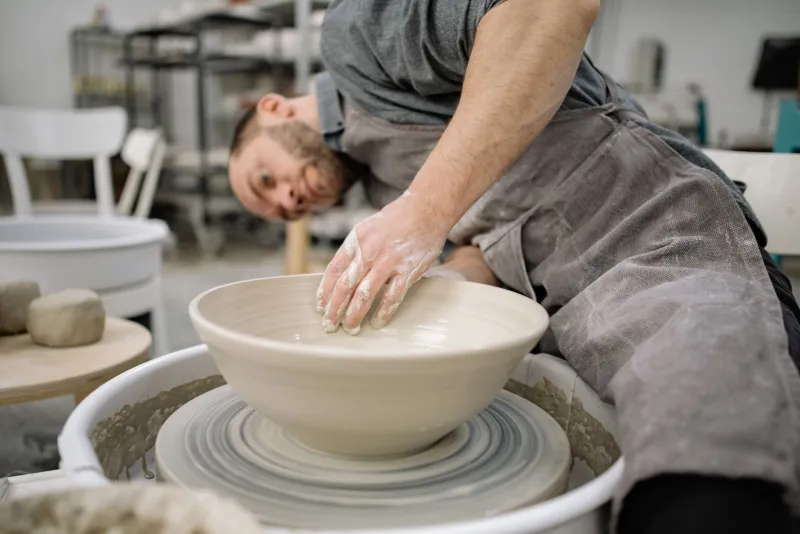
The finished product varies considerably by family. Some take the form of annotated visual catalogues, with each object accompanied by an extended essay tracing its acquisition, its meaning within the household, and its relationship to the broader aesthetic vision. Others resemble design manifestos—articulations of principle rather than descriptions of possession. A family with a deep commitment to natural materials, for instance, might produce a document that explains not just what they own, but why they believe the texture of hand-thrown ceramics communicates something about human dignity that no machine-made surface ever could.
The Professionals Who Make It Possible
The individuals doing this work tend to resist easy categorization. Some trained as art historians before pivoting toward private client work. Others arrived from interior design, finding that their most meaningful client relationships were less about specifying furniture and more about understanding why certain spaces felt right to certain people.
What distinguishes the best practitioners in this field is an unusual combination of intellectual rigor and emotional intelligence. Extracting the aesthetic philosophy of a person who has never been asked to articulate it—who may, in fact, have operated entirely on instinct—requires a particular kind of interview technique. It also requires the patience to sit inside a family's home across multiple seasons, to observe how the light changes and how the owners move through their spaces, before attempting to translate any of it into language.
Many of these consultants are reluctant to advertise, operating almost entirely through referrals within tight-knit networks of family offices and private wealth managers. Their clients, for their part, tend to be equally discreet. The construction of a taste library is an intimate undertaking, and most families treat it as such.
The Question of Transmission
Building the archive is only half the challenge. The more philosophically complex question is what transmission actually means in this context. A financial inheritance is relatively straightforward to transfer. An aesthetic philosophy is not a possession—it cannot simply be handed over. It must be encountered, absorbed, and ultimately reinterpreted by each successive generation according to their own experience.
The most thoughtful practitioners in this field are explicit about this limitation. The goal of a taste library, as they frame it, is not to dictate but to illuminate. It offers future generations access to a way of seeing, not a mandate to replicate it. A grandchild who reads their grandmother's extended meditation on why she chose to live with unfinished wood rather than lacquered surfaces may ultimately arrive at entirely different aesthetic conclusions—but they will arrive at them in conversation with something real, rather than in a vacuum.
This distinction matters enormously to the families commissioning this work. Many of them have watched inherited objects become burdens rather than gifts—magnificent things acquired without context, maintained out of obligation rather than love. The taste library is, in part, a corrective to that experience. It attempts to give future heirs not just the object, but the education required to understand it.
A New Measure of Wealth
There is something deeply revealing about the fact that this practice is emerging now, at a particular cultural moment when the wealthiest Americans are increasingly measuring status not by accumulation but by depth of engagement. The taste library is, in many respects, a logical extension of that shift—a declaration that what a family valued was not the mere possession of beautiful things, but the developed intelligence that made those things meaningful.
For the families investing in this work, the archive represents a conviction that their most important inheritance is not financial but philosophical: a way of moving through the world with attention, discrimination, and care. Whether future generations choose to honor that inheritance, adapt it, or set it aside entirely is, ultimately, their own prerogative. But they will make that choice with full knowledge of what came before them—and that, in itself, is a form of wealth that no estate document has ever been designed to convey.