Beyond the Known Map: The Invisible Private Enclaves Where America's Elite Have Quietly Chosen to Disappear
The Address That Doesn't Appear on Any List
Aspen remains luminous. The Hamptons endure. Palm Beach, Nantucket, and Montana's Yellowstone Club continue to attract the expected clientele. But among a quieter, more deliberate segment of American wealth, these celebrated destinations have acquired a faint stigma—not of failure, but of exposure. To be findable is, in certain rarefied circles, to have already conceded something.
What is emerging in their place is harder to describe and considerably harder to locate: a constellation of private residential communities, family compounds, and intentional enclaves that share almost nothing with their famous counterparts except the resources of their inhabitants. They do not advertise. They do not appear in architectural publications. Their names, when they have names at all, circulate only among the people who already belong.
They are, by design, invisible. And that invisibility is the entire point.
Sovereignty by Another Name
The communities that represent this new geography of retreat share several defining characteristics, though they resist easy categorization. They tend to be located in regions that have not been conventionally associated with luxury—rural Appalachia, the high desert of the Southwest, the forested interior of the Pacific Northwest, stretches of the Gulf Coast that tourism forgot. Their physical remoteness is not incidental; it is structural.
Many operate with degrees of internal governance that would surprise outsiders. Prospective residents undergo processes that resemble, in their thoroughness, the vetting procedures of private clubs—though the criteria applied are rarely financial. Shared values, intellectual compatibility, and what one might loosely describe as a commitment to the community's founding philosophy weigh more heavily than net worth alone. Wealth is assumed. What is evaluated is everything else.
Infrastructure within these communities is frequently private and self-sustaining. Water systems, energy generation, road maintenance, even internal communication networks operate independently of municipal services. This is not survivalism; it is sovereignty—the quiet assertion that genuine privacy requires the elimination of every point at which the external world might intrude.
The Architecture of Intentional Anonymity
The physical character of these enclaves reflects their founding philosophy with considerable precision. Where celebrated resort communities have historically embraced architectural grandeur as a form of collective advertisement, these newer communities tend toward restraint so deliberate it reads as a statement.
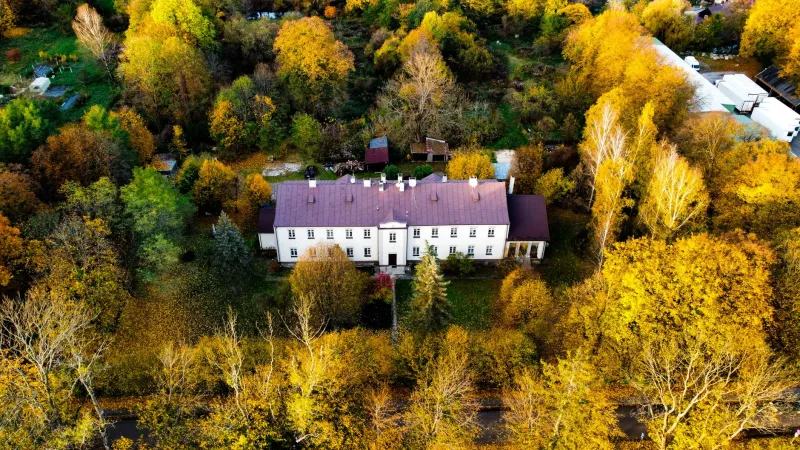
Structures are designed to recede. Materials are chosen for their relationship to the surrounding landscape rather than their capacity to impress. The visual language is one of belonging rather than arrival—buildings that appear to have grown from the land rather than been imposed upon it. Several communities retain design review processes that actively discourage anything that might be described as ostentatious, not as an aesthetic preference but as a governing principle.
One architect who has worked on several such projects describes the brief he receives consistently: the structure should not read as wealthy. It should read as considered. The distinction, in practice, requires an entirely different vocabulary of materials, proportion, and siting—one that demands more sophistication, and typically more expense, than the conspicuous alternative.
The Curated Neighbor
Perhaps the most striking departure from conventional luxury real estate is the degree to which these communities treat the composition of their resident population as a design element in its own right. The neighbor one acquires is considered as carefully as the land one purchases.
This is not a new instinct—private clubs have always managed membership with similar intentionality. What is distinctive here is the explicit rejection of wealth as the primary organizing principle. Communities that have attracted significant attention within this world describe their resident profiles in terms of intellectual range, professional diversity, and temperamental compatibility. The goal, as several founding members have articulated it, is not a community of similar people but a community of interesting ones.
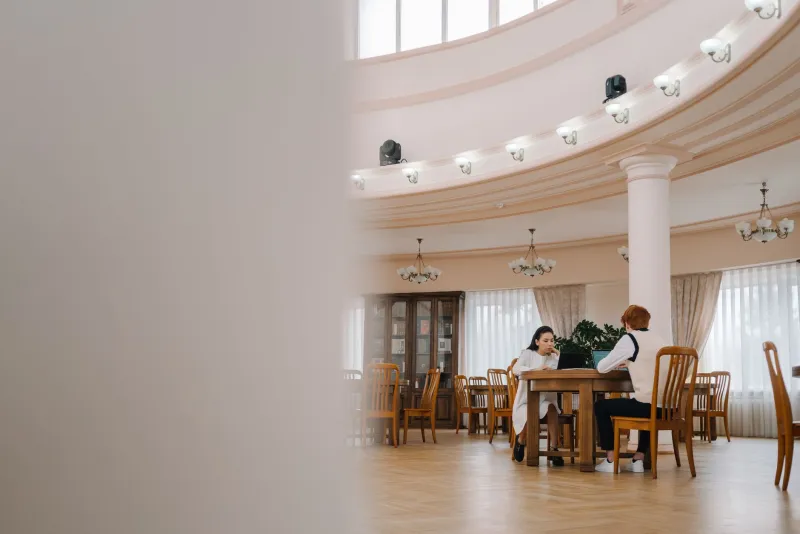
The result, in the most successful of these enclaves, is something that functions less like a residential development and more like a curated society—a place where the density of stimulating conversation per square mile rivals that of any urban center, while the density of external intrusion remains effectively zero.
The Status of Not Being Found
There is an irony that these communities acknowledge with varying degrees of comfort: the act of deliberately avoiding status has itself become a form of status. To have chosen an address that no one recognizes communicates, to those who understand the language, a level of security and self-possession that no celebrated zip code can convey.
The most coveted thing in American luxury has always tracked, at its core, with scarcity. What is scarce now—genuinely, structurally scarce—is not the spectacular view or the private beach. It is the experience of existing, even briefly, beyond the reach of a world that has become comprehensively legible. These communities are selling something that no amount of architectural distinction can manufacture: the sensation of having genuinely disappeared.
For those who can find them—and finding them is, by design, a credential of its own—they represent the most honest expression of what privacy has come to mean among America's most thoughtful affluent: not the absence of others, but the presence of exactly the right ones.