The Unglamorous Premium: How the Wealthiest Americans Are Seeking Experiences That Defy the Camera
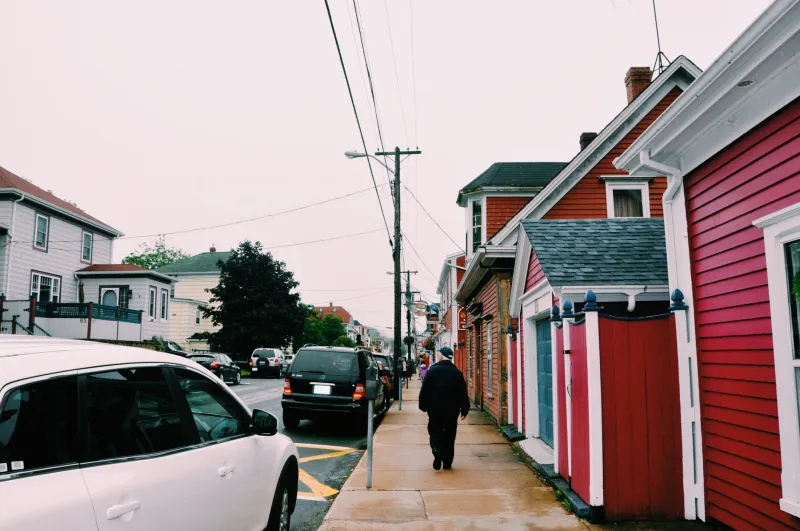
The lobby is unremarkable. The sheets are clean but not thread-counted into mythology. The view from the window is a parking structure and, beyond it, a neighborhood hardware store that has occupied the same corner for forty years. There is no concierge, no welcome amenity, no curated local guide printed on artisanal paper. There is, crucially, no reason whatsoever to photograph any of it.
For the guest staying here—a former tech executive who sold his company for a figure that rendered most conventional luxury irrelevant—that is precisely the point.
The Rebellion Against the Polished Frame
Something has shifted at the upper registers of American consumer culture. The luxury travel and hospitality industries have spent the better part of a decade perfecting a visual language calibrated for social media: the infinity pool that dissolves into horizon, the breakfast tray arranged with the precision of a still life, the suite that functions primarily as a backdrop. This aesthetic has been enormously successful by most commercial measures. It has also, for a specific and influential cohort of wealthy Americans, become something to actively flee.
"My clients used to ask me for the most beautiful hotel in a city," says one high-end travel advisor based in San Francisco who has watched her practice evolve in unexpected directions over the past several years. "Now I have clients who specifically ask me to find them somewhere that no one they know would ever think to look. Not because it's secret in the traditional sense, but because it's genuinely ordinary. They want to disappear."
The experiences being sought under this framework range from the mildly unconventional to the deliberately austere. Some clients request accommodations in residential neighborhoods rather than hotel districts—short-term rentals chosen for their anonymity, their functional kitchens, their proximity to dry cleaners and grocery stores rather than Michelin-starred restaurants. Others are hiring guides who have built their practices specifically around the avoidance of the established luxury tourism circuit: no private museum tours, no reserved tables at celebrated restaurants, no choreographed encounters with local culture.
What Ordinary Costs
The economics of this trend are worth examining with some care, because they are not what they initially appear. The unglamorous experience is not, in most cases, an inexpensive one. The travel advisor facilitating the anonymous residential stay charges the same fees she would command for booking a penthouse at a celebrated property—often more, because the research required to identify genuinely appropriate ordinary accommodations is considerably more intensive than consulting a preferred hotel list.
The guides operating outside the luxury circuit command premium rates for the same reason: the knowledge required to construct an experience that feels genuinely unmediated—that does not smell, even faintly, of curation—is harder to acquire and more difficult to execute than the knowledge required to replicate a well-worn itinerary of prestige destinations.
"There is an enormous amount of work that goes into making something feel unconstructed," acknowledges one experiential travel designer based in New York who has built a practice around what she calls 'anti-itinerary' travel for high-net-worth clients. "The ordinary experience, when it's done well, costs more than the extraordinary one. Because the extraordinary one has been done before. We're building something from the ground up every time."
The Status Logic of the Invisible
To understand why wealthy Americans are paying premiums for experiences that are, by design, impossible to display, it is necessary to understand the specific social context from which this behavior emerges. The Instagram-fication of luxury travel—the reduction of extraordinary places and experiences to shareable images—has, paradoxically, democratized the visual grammar of high-end living. The infinity pool, the private villa, the tasting menu: these things are now available, at least visually, to anyone with a social media account and a desire to curate an aspirational feed.
For those who have actually lived inside the most celebrated luxury experiences, this visual democratization has produced a specific discomfort. When the appearance of an experience is as accessible as the experience itself, the experience loses something. The signal is diluted. The meaning migrates.
What cannot be replicated, photographed, or shared is the texture of genuine ordinariness: the specific quality of an afternoon spent in a neighborhood that has no particular reason to be visited, the satisfaction of a meal prepared in a rented kitchen from ingredients purchased at a local market, the peculiar freedom of moving through a city without the infrastructure of luxury hospitality orienting every decision.
"You can fake the beautiful," observes one frequent traveler who has largely abandoned traditional luxury accommodations in favor of what he describes as 'invisible travel.' "You cannot fake the real. And right now, the real is the hardest thing in the world to find."
A Redefinition in Progress
What this trend reveals, ultimately, is a luxury market in active philosophical negotiation with itself. The category that built its identity on the visible—on the display of access, of refinement, of experiences that announced their own excellence—is encountering a subset of consumers for whom visibility has become the problem rather than the point.
For these consumers, status is no longer communicated through the quality of the photograph. It is communicated, if it is communicated at all, through the confidence of someone who has no need to demonstrate anything. The experience that leaves no record, that fits into no recognizable luxury narrative, that cannot be captioned or contextualized or shared—this is, paradoxically, the experience that now commands the highest premium among those who have already had everything else.
The unglamorous, it appears, has become its own form of glamour. Only this time, no one is watching.