Where the Year Actually Happens: The Unwritten Circuit America's Most Connected Attend
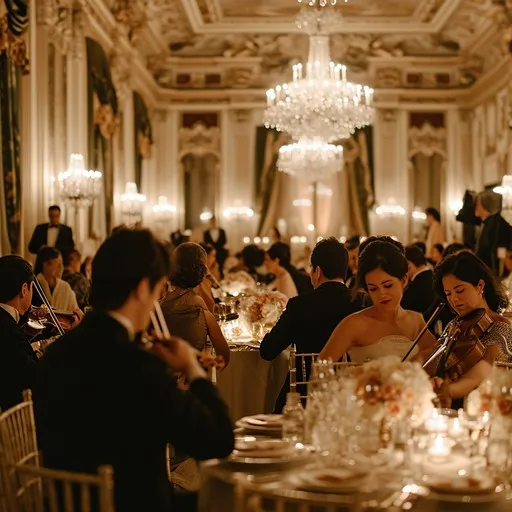
Photo: elegant candlelit private dinner party in historic estate, guests in evening attire, via images.stockcake.com
Ask anyone fluent in American high society about the season, and they will speak of Aspen in December, the Hamptons in July, the well-documented rhythm of benefits and premieres. Ask the right person, however, and a different calendar emerges — one that has never been printed, cannot be purchased, and shapes the movements of a remarkably small group of people each year.
A Calendar That Exists Only in Correspondence
This parallel schedule lives in emails, phone calls, and occasionally a discreet card mailed to a home address. A private preview of a rarely staged opera in a Manhattan townhouse reconfigured for a single evening. A harvest weekend at a Napa or Willamette Valley vineyard where the guest list hovers near forty. A closed archive viewing at a New England historical society, timed to coincide with a birthday dinner two towns over.
None of these appear in society pages. That absence is not an accident but the organizing principle. Public visibility, in this world, signals the wrong kind of ambition.
The Brokers of Belonging
What makes the circuit function is a thin layer of intermediaries — invitation brokers, as some are quietly called, though few would use the phrase about themselves. They are former museum development directors, retired diplomatic staff, sommeliers with improbable rolodexes. Their value lies not in selling access, which would cheapen it, but in vouching for it.
A family relocating from Chicago to the West Coast does not research events; they retain someone who understands which gatherings matter in a given quarter and, more importantly, which invitations should be declined. Refusal, handled gracefully, is itself a form of participation. The calendar rewards those who appear selective — and attendance at everything marks a newcomer faster than absence from anything.
Timing as a Statement of Standing
The deeper logic of the circuit concerns how a year is structured. Those of genuine standing arrange their lives around the gatherings that matter to them — a December weekend in Charleston built around a private home tour, an October mapped to a single auction preview in Los Angeles. The rest of the calendar bends accordingly.
This inversion is deliberate. The publicly scheduled season — the one visible in magazines — is treated as backdrop. The private circuit, by contrast, is planned twelve to eighteen months ahead, often around agricultural cycles, restoration timelines, and the availability of a handful of hosts whose invitations anchor entire regions.
Why the Doors Stay Closed
Skeptics might ask what distinguishes these gatherings from ordinary private parties. The answer is continuity. The circuit is not a series of events but a single, year-long conversation conducted across geographies — the same hundred faces moving from a vineyard to a library to a rehearsal hall, each occasion deepening relationships that have commercial, philanthropic, and sometimes matrimonial consequences.
Admission, therefore, cannot be bought because what is exchanged is not hospitality but trust. A host who opens a home for an unlisted evening is extending something closer to membership than invitation. And membership, in the truest sense, is the one luxury that has never been for sale.